
A medicine can travel through several countries before it reaches the person who needs it. It might start at a manufacturing site, move to a distribution centre, spend time in a temperature-controlled warehouse, pass through an airport and then go through customs before finally reaching a pharmacy or hospital. From the outside, it can look like a fairly ordinary shipment. It isn’t.
Pharmaceutical products have to be handled differently from most other goods. There are strict temperature requirements, regulatory checks, tracking systems and a lot of documentation involved at almost every stage. And if something goes wrong, the consequences can be much bigger than a delayed delivery.
Keeping Medicines at The Right Temperature
Temperature is one of the biggest concerns when medicines are being moved around the world. Some products are relatively stable, but others are much more sensitive. Vaccines, insulin and many biologic medicines, for example, can be affected if they spend too long outside their required temperature range.
This is where cold chain logistics comes in. Some pharmaceutical shipments use active cooling systems, with powered units that continuously control the temperature inside the container. Others use passive packaging, including insulation and phase-change materials, to keep the contents within the required range without relying on a powered cooling unit.
Then there’s the monitoring side. Temperature data loggers can travel with the shipment and record conditions throughout the journey. Depending on the system being used, data can also be transmitted so that logistics teams can see if something has gone outside the acceptable range. That information can be extremely useful. A shipment arriving at its destination isn’t necessarily enough. There needs to be evidence that it stayed within the required conditions along the way. The International Air Transport Association (IATA) has specific guidance around pharmaceutical air cargo, including temperature-sensitive shipments.
There’s A Lot Happening Before Anything Crosses A Border
Pharmaceutical compliance doesn’t begin when a truck reaches customs. It starts much earlier, at the manufacturing and testing stages. Good Manufacturing Practice, commonly referred to as GMP, sets requirements around how medicines are produced and controlled. Good Distribution Practice, or GDP, deals with what happens afterwards, including storage, transportation and handling. The two are connected. A medicine can leave a manufacturing facility in excellent condition, but that quality still has to be maintained while the product is being transported and stored.
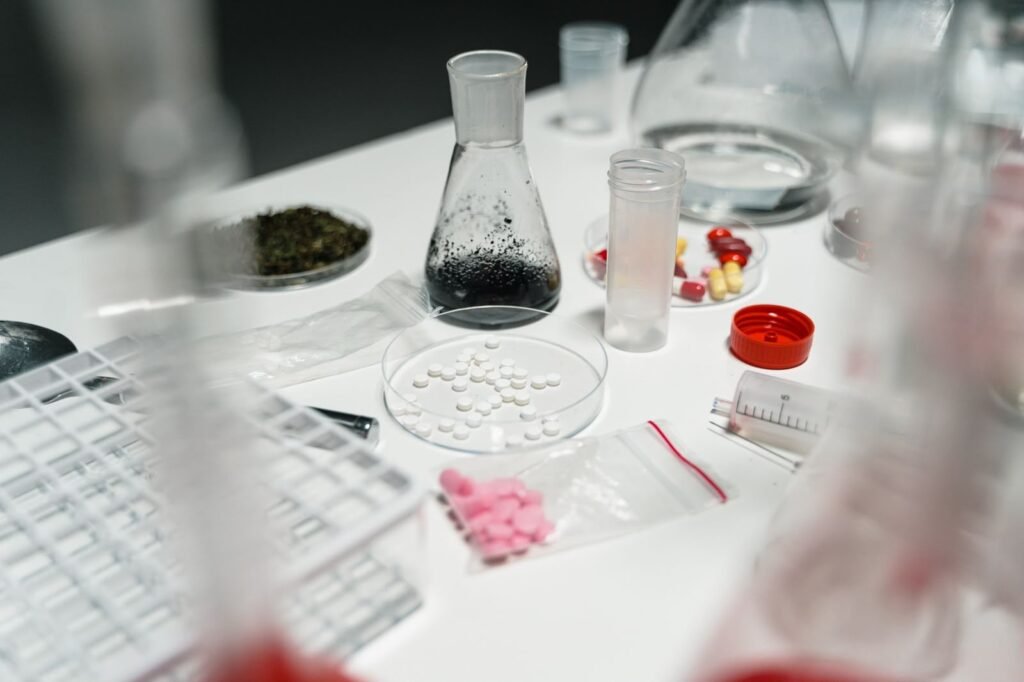
Quality control can involve checking things such as identity, purity, strength, stability and possible contamination. Depending on the type of product, the testing process can be highly detailed. Facilities need controlled conditions, accurate measurements and properly maintained lab equipment to support this work.
There’s also the paperwork. Import requirements, licences, certificates and other documentation can vary between countries. A shipment may therefore be technically ready to go but still face delays if the required information isn’t in place.
Knowing Where Every Package Came From
Counterfeit medicines are another reason traceability has become such an important part of the pharmaceutical supply chain. A modern medicine package can carry a unique code that connects it to information about the product, batch and expiry date. This creates a digital trail that can be checked as the product moves through the supply chain.
In Europe, safety features such as unique identifiers and anti-tampering devices are part of the system used to protect the legal medicine supply chain. This becomes especially useful when there’s a problem with a particular batch. Instead of having to search through a huge amount of paperwork to work out where affected products went, companies can use the available records to identify products and their movements more quickly. It doesn’t remove every risk, but it makes the supply chain much easier to follow.
Why Airports Need Specialist Systems
Air freight is often used for medicines that are particularly time-sensitive or valuable. But pharmaceutical cargo can’t simply be treated like another box being moved through an airport. Temperature-controlled storage may be needed while the shipment waits for its next stage. Staff need to understand the handling requirements. There also has to be a plan for moving the cargo quickly between storage areas, vehicles and aircraft. This is one reason specialist pharmaceutical handling programmes have become more common.
IATA’s CEIV Pharma programme, for example, focuses on areas including facilities, equipment, temperature control, staff training and handling procedures. The programme has expanded considerably since it was introduced, with certified companies and organisations involved across international pharmaceutical supply chains. That extra infrastructure matters because a shipment rarely stays with one company from beginning to end. There can be manufacturers, freight forwarders, airlines, ground handlers, customs authorities, distributors and pharmacies involved. Every handover is another point where the process needs to be managed properly.
All The Pieces Have to Work Together
There isn’t one piece of technology keeping pharmaceutical trade running. It’s the combination of several systems. Cold chain infrastructure helps protect sensitive medicines. Monitoring tools show whether conditions have remained within the required range. Serialisation helps identify individual products and batches. Regulatory standards create a framework for manufacturing, storage and distribution.
And then there are the people managing all of it. That part can easily be overlooked. Digital systems may provide data, but someone still has to respond when a temperature alert appears, investigate a shipment, check documentation or decide whether a product can continue moving. The technology is getting better and more connected, though. More real-time monitoring, digital records and automated systems are giving companies greater visibility into what’s happening while a shipment is in transit.
For the person picking up a prescription, none of this is usually visible. A box arrives at a pharmacy. It looks normal. The medicine is handed over. Behind that fairly ordinary moment can be a surprisingly complicated international journey. Getting a pharmaceutical product from a factory to a patient safely depends on a long chain of controls, checks and people doing their part correctly. When all of those pieces work together, the process disappears into the background.

