


An attractive moving image can catch the eye without giving viewers a reason to keep watching. An ai video generator such as Dreamina can create footage from a written description or use a reference image to guide a scene. That gives creators different starting points for developing a visual idea, but the finished video still needs a clear reason to watch. Viewers need to understand what deserves their attention, how one moment relates to another, and what they gain by continuing.
The useful question is therefore broader than how to create a dramatic opening. An opening matters because it introduces the experience that follows. If the rest of the video cannot develop that introduction, a stronger hook may simply make the mismatch more noticeable. Planning a worthwhile AI video means considering its subject, movement, information, and ending as parts of the same piece.
A reason to watch is different from a visual surprise
A surprising image can interrupt attention without establishing a useful direction. Once the initial novelty passes, the viewer still needs a reason to remain. That reason might be an explanation, a developing situation, an emotional experience, or a clear view of something they wanted to understand. It should come from the material itself rather than an unrelated promise attached to it.
This distinction changes how a creator evaluates generated footage. Instead of asking only whether a shot looks impressive, ask what becomes clearer or more interesting while it plays. A clip can be visually restrained and still justify its duration through a meaningful change. Another can contain constant movement while adding almost nothing after its first frame.
The intended audience helps define that value. Someone looking for practical guidance needs an identifiable subject and usable information. Someone watching a creative sequence may welcome ambiguity, provided there is a perceptible visual or emotional progression. A brand film may build recognition through atmosphere, but the atmosphere still needs a relationship to the message.
Write down what the audience should leave with before choosing the most dramatic candidate. This is a decision aid rather than a script formula. It lets you recognize when visual polish supports the purpose and when it distracts from it. If you cannot describe the contribution of a shot, adding more effects is unlikely to resolve the underlying uncertainty.
The opening establishes the terms of the video
The first image introduces more than a subject. Its framing, pace, and accompanying words suggest what kind of viewing experience is coming. A close detail can invite inspection. An active scene can suggest a developing event. A clear statement can establish the question an explanation will answer. Each approach creates expectations that later material needs to support.
An opening does not have to conceal the result. Showing the outcome early can give viewers a reason to care about the explanation that follows. Equally, withholding some information can be useful when the missing information is understandable and relevant. Confusion becomes a problem when viewers cannot identify either the subject or the question they are supposed to consider.
Avoid treating every video as a contest to deliver the loudest first moment. A long title animation may delay useful information, while an abrupt burst of motion may leave the topic unclear. The right opening gives the audience enough orientation to decide that the piece is relevant. That can happen through a direct image, a concise sentence, or their combination.
Read the opening together with the title and caption. They operate as one introduction, even if different people prepared them. If the wording promises a demonstration while the footage offers only a visual concept, revise the promise or supply the missing demonstration. A compelling introduction should remain accurate after someone has watched the entire video.
Motion should reveal something that a still image cannot
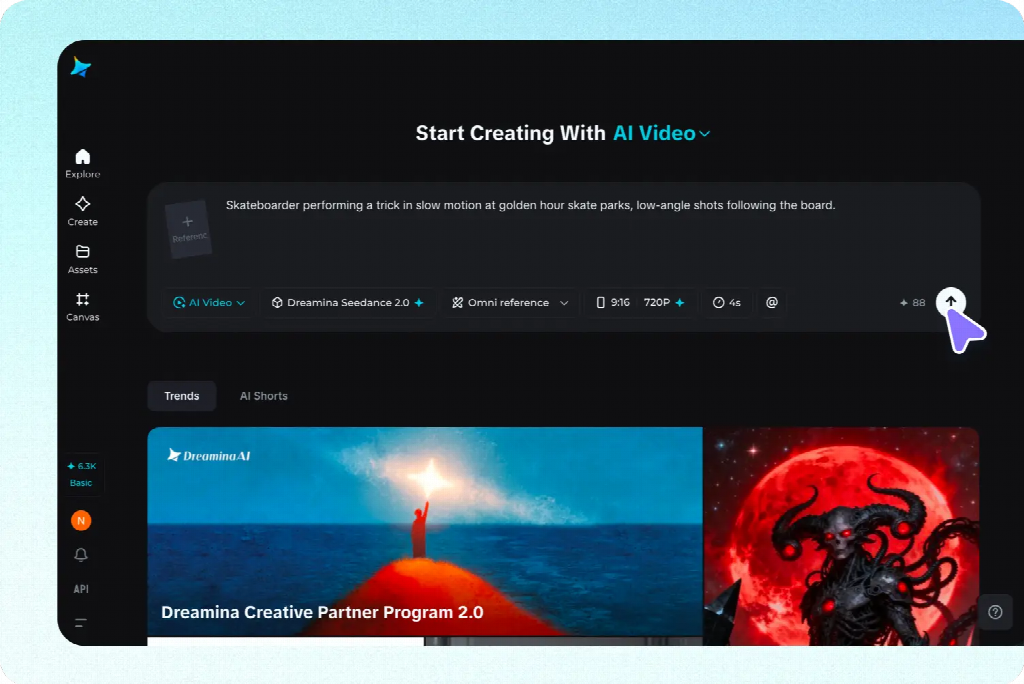
AI video becomes more purposeful when movement carries information. A change in position can reveal a spatial relationship. A gradual transformation can communicate a developing idea. A shift in viewpoint can make a previously hidden feature visible. These functions give motion a reason to exist beyond decorating a frame.
Subject movement and camera movement also do different jobs. Moving the subject directs attention to an action or change. Moving the viewpoint changes what the audience can inspect and how the space feels. Combining them may be appropriate, but it can also make a simple relationship harder to follow. Decide which source of movement carries the essential meaning.
The platform’s Seedance 2.5 workflow goes beyond a text prompt or single still. Its reference-to-video capability, called R2V, accepts image, video, and audio references alongside written direction. Storyboards, character references, and motion clips can provide different parts of the creative brief. This is useful when the desired scene is easier to communicate through existing visual or movement material than through a longer description.
Those inputs should have distinct purposes. A character reference can communicate appearance, a storyboard can communicate the intended sequence, and a motion reference can communicate the action or rhythm. Keep the written direction focused on how they should work together. Then assess whether the generated shot follows that relationship, rather than approving it solely because individual frames resemble the references.
The model also offers localized editing for targeted revisions, including removing unwanted objects, changing selected scene elements, and adjusting camera angles or audio. A promising shot may therefore be a candidate for refinement instead of complete regeneration. Use that control when the problem is specific: identify the distracting element or incorrect detail, make the change, and review the surrounding scene for unintended effects.
For a longer idea, Long Video mode provides another production option, while synchronized audio can connect sound with the generated scene. Upscaling and interpolation are available refinement tools for resolution and motion smoothness. Feature access depends on the selected model and plan, so choose the available tools according to the actual weakness in the draft rather than applying every enhancement.
These capabilities matter because they give the creator different kinds of control: references communicate intent, local edits address a specific problem, and finishing tools refine a selected result. None of them decides whether a shot earns its place. Compare the revised footage with the opening promise and the scene that follows. Retain a result when the movement advances the idea and the important subject remains understandable throughout.
Pacing depends on information, not constant speed
Fast editing and engaging editing are not interchangeable. A viewer needs enough time to identify a subject, follow its change, and read any essential wording. Cutting before those tasks are possible can make a sequence feel busy while reducing comprehension. Holding long after the useful information has arrived creates a different problem: the video stops developing.
The amount of time a shot needs depends on its visual load. An uncluttered image with one action can often be understood more quickly than a dense composition with several relationships. Text introduces another task. When important words and important movement compete, the solution may be to separate their timing rather than make both appear faster.
Build variation around meaning. A pause can give a key point weight, while a quicker passage can connect material the audience already understands. Repeating the same duration for every generated clip may preserve production convenience but flatten the finished piece. The edit should respond to what each passage contributes.
Watch the sequence without music during review. This can expose transitions whose sense of momentum comes mainly from the soundtrack. Then restore the audio and assess the combined effect. Music may support timing and mood, but the visible progression should still be understandable when the intended viewing situation includes muted playback.
Continuity gives separate clips a shared direction
A video assembled from individually appealing shots can still feel disconnected. Consistency in color or style helps, but viewers also need continuity of meaning. The next shot should develop, clarify, contrast with, or resolve something already introduced. A decorative transition cannot create that relationship on its own.
Consider what remains stable across a cut and what changes. Keeping the subject recognizable allows the viewer to focus on a new detail. Keeping the question stable allows a new setting to contribute relevant information. If subject, setting, scale, and purpose all change together, the audience may have to reconstruct the context before understanding why the next shot is present.
Generated material also needs particular attention to details that carry identity. Unexpected changes in shape, clothing, proportions, or object features can interrupt recognition. Perfect similarity in every background element is not always necessary. Prioritize the features that tell viewers they are following the same subject or process.
Some discontinuities are intentional. A contrast between scenes can communicate a difference more clearly than a smooth match. The test is whether the change serves an understandable relationship. If the cut requires a long explanation to justify its presence, reconsider the shot order or remove material that adds another topic without advancing the current one.
Words and sound should add a distinct contribution
Captions, narration, and visual action can reinforce one another without repeating every detail. Words can name an idea the image cannot express precisely. Images can show relationships that would require lengthy description. Audio can establish mood or make a transition easier to perceive. Assigning each element a role reduces competition for attention.
Avoid asking a short caption to repair an unclear sequence. If the audience must read several sentences to understand a basic action, the footage may need a different composition or edit. Conversely, an abstract concept may legitimately require words. The goal is a useful division of work, rather than a rule that every message must be understandable through imagery alone.
Check the wording for claims the footage cannot establish. Generated imagery can illustrate a possibility without proving that an event happened or a product achieved a result. The difference should remain clear in the surrounding language. This protects the coherence of the video as well as the audience’s understanding of what they are seeing.
The ending determines whether the attention was worthwhile
An ending can deliver an answer, complete an action, reinforce a message, or leave a deliberate emotional impression. It does not always require a summary or a call to action. It does need a recognizable relationship to the reason the video began. Otherwise, even a polished sequence can feel unfinished.
Review the last passage beside the first. Has the original question developed? Has the promised information arrived? Does any requested next action follow logically from the content? If the ending introduces the real topic for the first time, the earlier material may be taking too long to establish its purpose.
A useful final review separates technical quality from editorial value. Watch for unstable details, awkward cuts, unreadable text, and audio problems, then ask whether the piece rewards the time it requests. Resolving a rendering defect cannot make an irrelevant scene necessary. Removing an unnecessary scene may improve the video more than generating a technically cleaner replacement.
The strongest version is often the one with a clear contribution at every stage. Its opening creates an appropriate expectation, its movement and editing develop that expectation, and its ending delivers something connected to it. AI footage becomes worthwhile viewing when those choices work together, with each shot earning its place in the finished video.

